Day Tour Itineraries for Independent Travellers
Egypt's major sites are concentrated enough to cover multiple destinations in a single day — if you plan the sequence and timing correctly. These itineraries are designed for independent travel without a guide, though we note where specialist commentary adds particular value.
How These Itineraries Were Designed
Every itinerary on this page has been tested by our researchers in person. The timing estimates are based on actual visit durations, not the optimistic figures published by tourism boards. When we say a site requires three hours, we mean a visitor who is reading the inscriptions, taking photographs, and absorbing the historical context — not one who is walking through quickly.
Fewer Sites, Better Visits
The single most common mistake in Egypt trip planning is attempting to cover too many sites in a day. The Giza Plateau, the Grand Egyptian Museum, Saqqara, and Memphis are all within reasonable driving distance of central Cairo — but combining all four in a single day means you will do none of them justice. Our itineraries make deliberate choices about what to include and what to save for another day or another trip. We explain those choices explicitly so you can adapt them to your priorities.
We also note which site combinations make logical sense from a transit perspective and which involve backtracking. In Egypt, where road traffic in Cairo can add significant time to any journey, itinerary sequencing has a direct effect on how much time you have at the sites themselves.
Getting Between Sites
For most heritage sites, independent travellers use a combination of taxi and private car hire. Uber and similar apps function in Cairo and to a limited extent in Luxor and Aswan, but coverage becomes unreliable outside city centres. For the Giza-Saqqara corridor, a half-day private car hire through the hotel concierge or a booking made the previous evening is typically the most practical option — negotiate a flat rate rather than metered fare, and agree what is included (waiting time at each site, fuel) before departure.
The Luxor West Bank is best approached by bicycle, electric shuttle, or taxi — with bicycle hire strongly recommended for fit travellers in the cooler months (October–March). The road surfaces between major West Bank sites are reasonable, distances are short, and cycling gives you the freedom to stop when something catches your attention. In summer months (June–September), the midday heat makes cycling inadvisable between 10:00 and 16:00.
Starting Early: Why It Matters
At major sites like the Valley of the Kings, Karnak, and the Giza Plateau, the difference between arriving at 07:00 and arriving at 10:00 is the difference between experiencing these places in relative quiet — with sufficient light for good photography and enough space to actually stand in front of what you are looking at — and navigating through the intersection of six simultaneous tour groups. Our itineraries assume early starts precisely because this makes a qualitative difference to the experience.
In practical terms: book accommodation within thirty minutes of your key sites. In Luxor, stay on the East Bank but take the ferry across at dawn for West Bank sites rather than arranging a taxi from across the river. In Aswan, the sites are compact enough that a centrally located hotel reduces transit time substantially.
Giza & Saqqara: The Pyramid Day
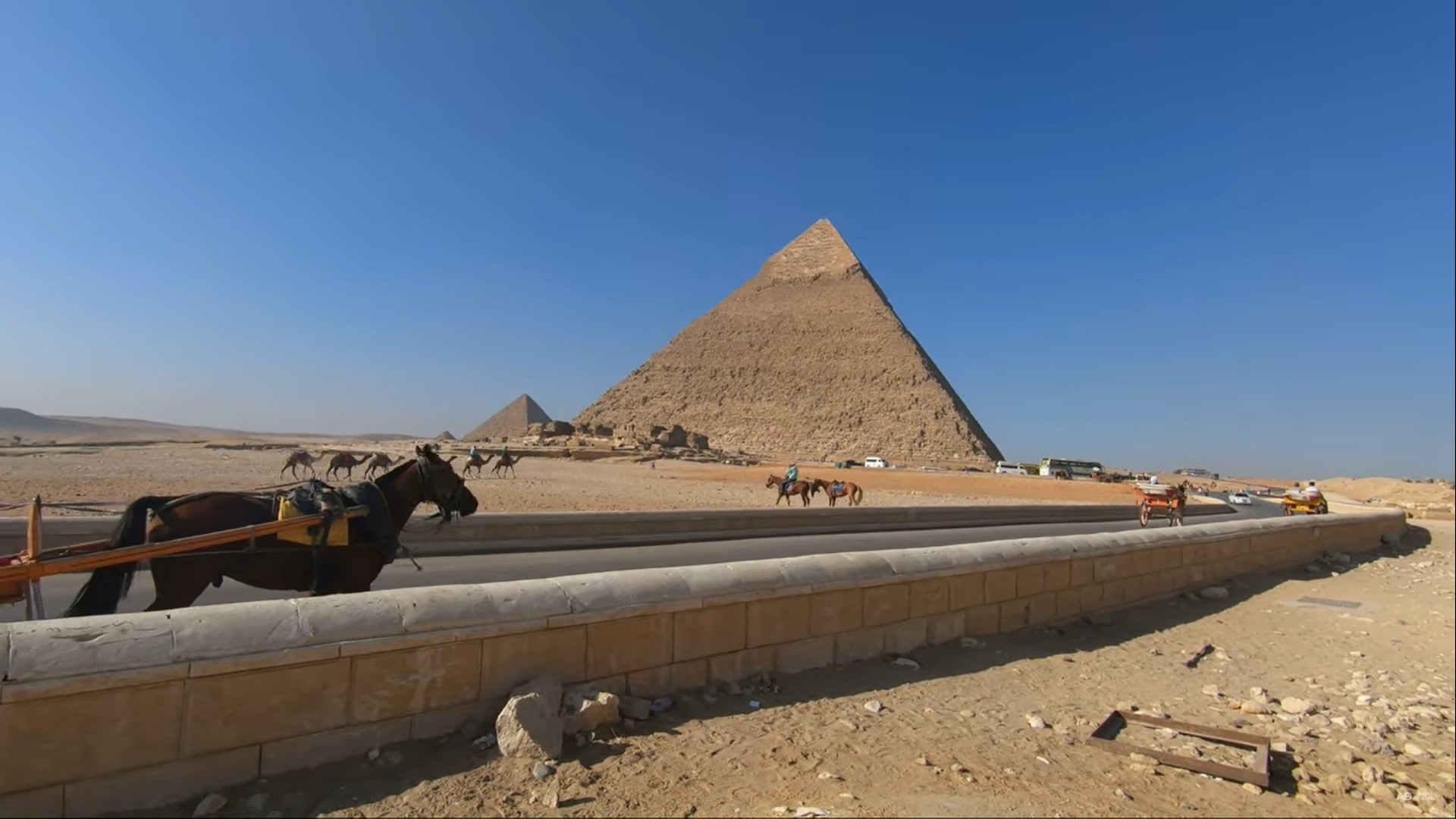
This is the itinerary most Cairo visitors attempt, and most fail to do properly. The critical principle: the Giza Plateau and Saqqara are separate days if you want to do both well. If you have one day, choose one. If you can only do Giza, the Grand Egyptian Museum (GEM) is a logical afternoon complement. Below is our recommendation for visitors with a full day.
Arrive at Giza Plateau — ticket office opens
The main ticket office opens at 07:00. Arrive on opening to beat the first tour bus wave at 09:00. Buy your entry ticket plus the Great Pyramid interior ticket (EGP 400 additional — only 300 people per day allowed inside) at the same window if you plan to enter. Start at the Pyramid of Menkaure (farthest from the entrance), work back east. This means you approach the Great Pyramid as a culmination rather than immediately.
Giza Plateau — three pyramids and the Sphinx
The standard circuit takes 2.5–3.5 hours at a thoughtful pace. The Sphinx enclosure (included with general admission) is best visited after the main pyramid circuit, when it is still relatively quiet. The Solar Boat Museum adjacent to the Great Pyramid (EGP 100 separate) displays the reassembled cedar barque found in a pit at the pyramid's foot in 1954 — a genuinely extraordinary object worth the extra admission.
Grand Egyptian Museum — Tutankhamun galleries
The GEM is a 10-minute drive from the Giza Plateau. If you pre-booked your Tutankhamun gallery ticket online (strongly recommended), skip the queue and head directly to the upper level. Allow minimum 2 hours for the Tutankhamun section alone. The general permanent galleries require a separate half-day visit — resist trying to do both on the same day. Exit via the museum restaurant on the Nile-facing terrace for lunch.
Return to Cairo or afternoon at leisure
With Giza and the GEM Tutankhamun section covered, the afternoon is genuinely better spent resting or exploring Islamic Cairo than attempting to add another major site. The Citadel and Khan el-Khalili are 40 minutes from Giza by road and reward exploration at a slower pace, with no fixed admission sequence to manage.
West Bank: Valley of the Kings + Supporting Sites
The West Bank of Luxor contains more significant archaeological monuments per square kilometre than almost anywhere on earth. One day is the absolute minimum; three days is reasonable for a thorough visit. Below is the single-day version, prioritising the Valley of the Kings and two supporting sites.
Cross to West Bank by ferry
The public ferry from Luxor Corniche operates from approximately 06:00 and costs EGP 5. Cross early and hire a bicycle or taxi on the West Bank side. A pre-arranged private driver for the day costs approximately EGP 300–400 and eliminates the transit friction between sites.
Valley of the Kings — before the tour buses
Buy the standard three-tomb ticket (EGP 360) on arrival. Purchase the Tutankhamun premium ticket (EGP 300) if this is a priority — KV62 is historically important but the tomb itself is small and the famous mask is at the GEM, not here. For the three general-rotation tombs, prioritise KV9 (Ramesses VI — ceiling astronomical texts), KV6 (Ramesses IX — papyrus of Ani scenes), and KV11 (Ramesses III — relief quality). Leave by 10:00.
Temple of Hatshepsut (Deir el-Bahari)
The mortuary temple of Hatshepsut — the most powerful female pharaoh of the New Kingdom — is five minutes from the Valley of the Kings and one of the most architecturally remarkable buildings in Egypt. The three-tiered colonnaded facade is the model for what later Western classicism would recognise as a temple. The painted reliefs inside the porticoes are among the best-preserved narrative sequences from the New Kingdom period. Allow 60–75 minutes.
Medinet Habu — Mortuary Temple of Ramesses III
Consistently undervisited relative to its quality, Medinet Habu is the best-preserved mortuary temple on the West Bank. The painted reliefs in the first and second hypostyle halls retain exceptional colour. The military victory scenes on the outer walls document Ramesses III's campaigns against the Sea Peoples — among the earliest documented naval battles in history. The site is quiet, the ticket office straightforward (EGP 200), and the setting against the Theban hills on a winter afternoon is one of the best in Luxor. Return to East Bank by 16:00.
Quick Reference: Other Day Route Guides
Aswan: Philae, Unfinished Obelisk, Nubian Museum
Aswan's main heritage sites are compact and genuinely excellent. Begin at the Unfinished Obelisk in the granite quarry south of the city (EGP 80) — it gives an unparalleled understanding of how Egyptian monumental sculpture was created. Then the Philae island temples by motorboat (EGP 180 + boat hire). Afternoon at the Nubian Museum (EGP 200). The Aga Khan Mausoleum and Qubbet el-Hawa tombs on the West Bank can be added if energy allows. A comfortable day without early stress — Aswan's sites do not require the predawn urgency of Luxor or Giza.
Aswan site guides →Abu Simbel: Overnight vs. Day Convoy
Most visitors take the Aswan convoy — a convoy of tourist vehicles that departs Aswan at approximately 04:00 and returns by 14:00. This gives you around three hours at the temples, which is genuinely sufficient for a first visit. The alternative — flying from Aswan (45 minutes) or staying overnight at the Abu Simbel tourist village — allows a dawn visit before the convoys arrive, the chance to see the Sound and Light show the previous evening, and a much less rushed experience of the site itself. If Abu Simbel is a priority, the overnight option is worth the additional cost.
Transport options for Abu Simbel →Practical preparation for an Egypt visit
Currency, dress codes, photography rules, how to handle informal guides, and what to carry — the visitor tips guide covers the groundwork that makes these itineraries work smoothly in practice.